Best Summer Wedding Color Palettes for an Elevated Look

Summer weddings have a naturally romantic energy. We’re talking long golden evenings, fresh florals, destination worthy scenery, and a sense of effortless celebration. But as a wedding planner, I can tell you this - the color palette is what transforms a beautiful summer wedding into an unforgettable, elevated experience.

The right palette influences everything. From your floral design, bridal party attire, tablescapes, lighting, stationery, and even the emotional atmosphere of the day. Summer is the perfect season to embrace color, but elevated weddings are less about using more color and more about using color intentionally. 

Here are our favorite sophisticated summer wedding color palettes for couples who want a refined, editorial inspired celebration.

Coastal Blue and Soft Sandy Beaches
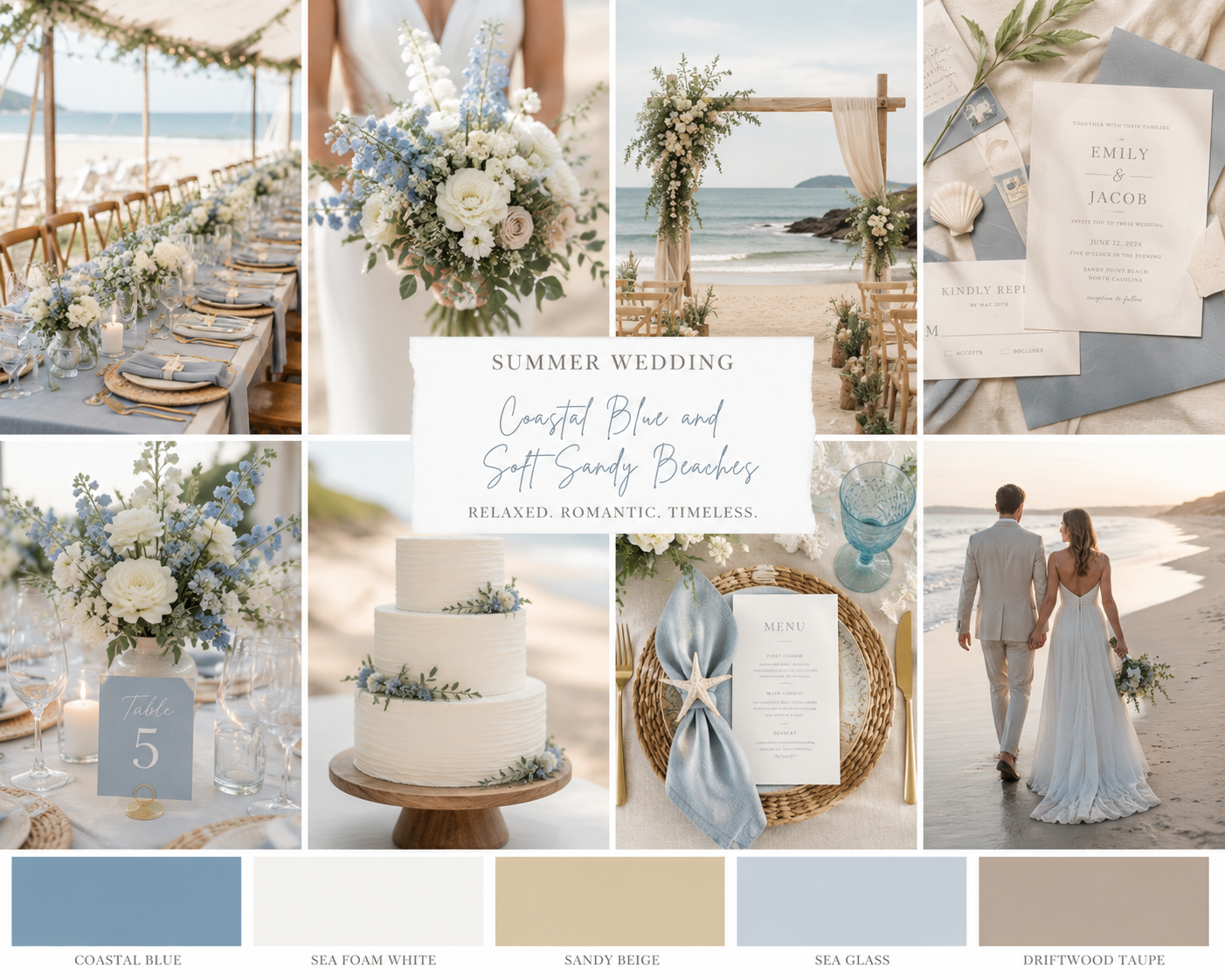
This palette is elegant, timeless, and effortlessly luxurious. Think of the Hamptons. A seaside wedding, lakeside venue, or upscale garden celebration. The combination of blue tones with warm neutrals creates a balance, with sophistication, without feeling overly formal. 

It photographs beautifully in natural sunlight. Soft blues reflect the summer skies and neutral tones ground the design. It’s nothing overly saturated and every tone complements the environment naturally. 

This palette is for you if you are seeking a: 

  • Coastal Wedding 

  • Yacht Club Celebration 

  • Luxury Tented Wedding 

  • Destination Wedding 

Sage Green and Champagne 
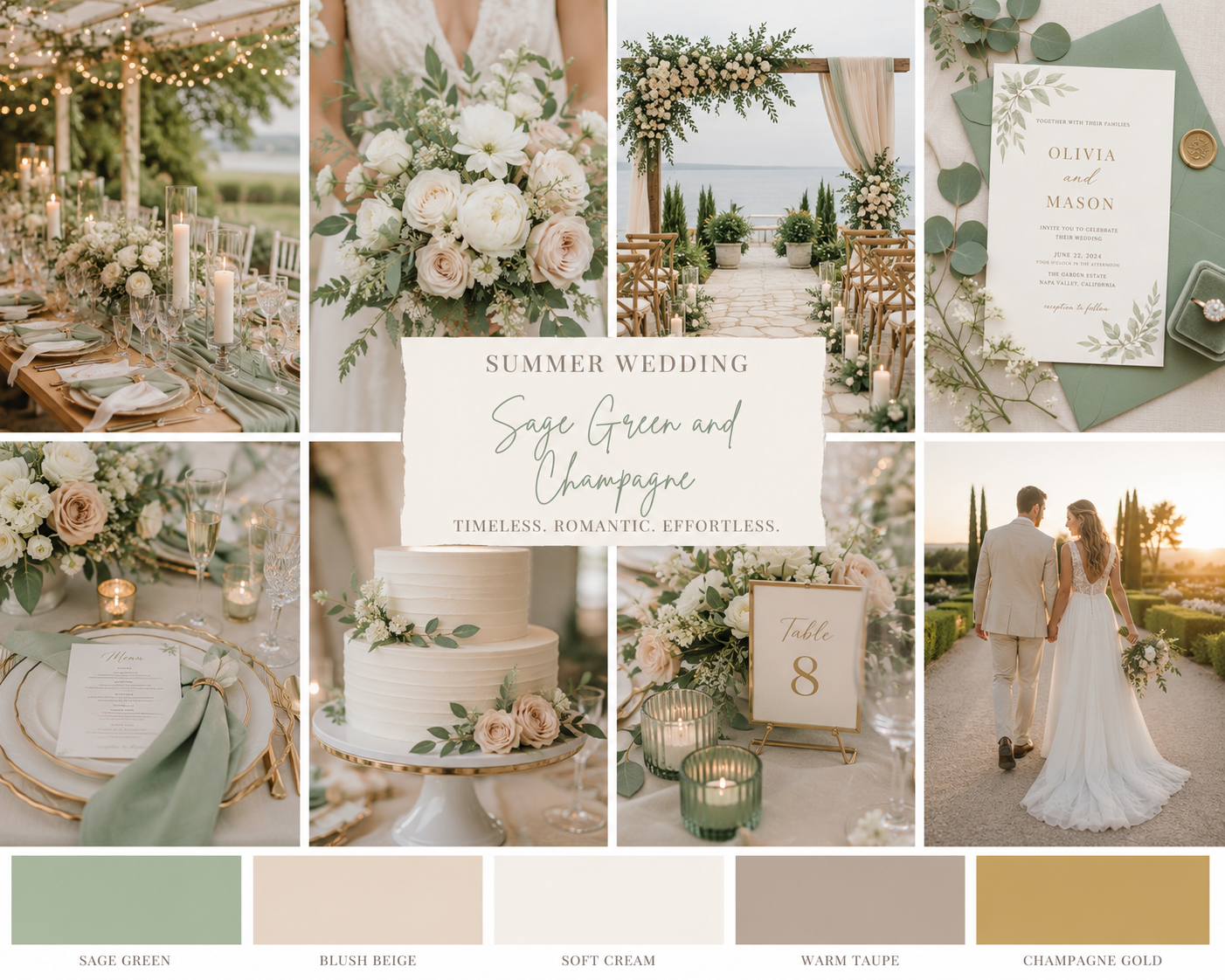
This is a classic color palette for summer. Sage green is modern, but classic. It works with virtually every venue style while still feeling fresh and seasonal. The secret to elevating this palette is with layering textures, instead of piling on the color. 

This palette leans into harmony. It flows seamlessly and creates a calm, romantic visual experience. 

This palette is for you if you are seeking a: 

  • Garden Wedding 

  • Estate Venue 

  • Vineyard Celebration 

  • European Inspired Wedding 

  • Classic Hotel 


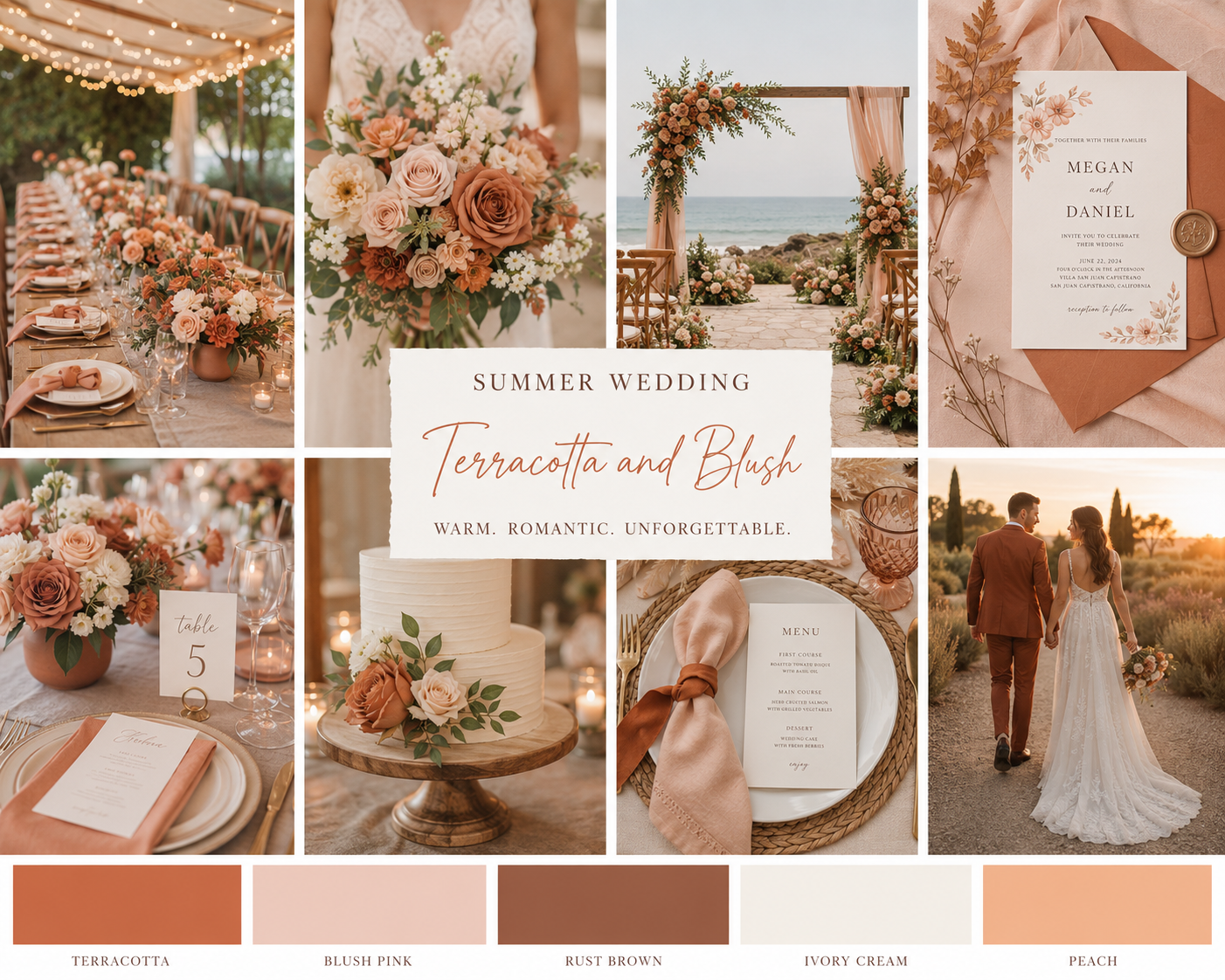
Terracotta and Blush 

Warm, editorial, and sunset inspired. This palette is for couples who want warmth, without going full boho. It creates a fresh and refined atmosphere, with a touch of Mediterranean vibes. It thrives during golden hour and works well with outdoor summer venues. It creates a stylish, but emotionally warm and inviting affair. 

Add in some taper candles to enhance the warm, neutral tones and add some fun florals - such as garden roses, ranunculus, and even fresh fruit (like a peach). 

This palette is for you if you are seeking a: 

  • Tuscany Inspired Affair 

  • Outdoor Estate

  • Desert Venues

  • Romantic Courtyard Celebrations

  • Rooftop Event


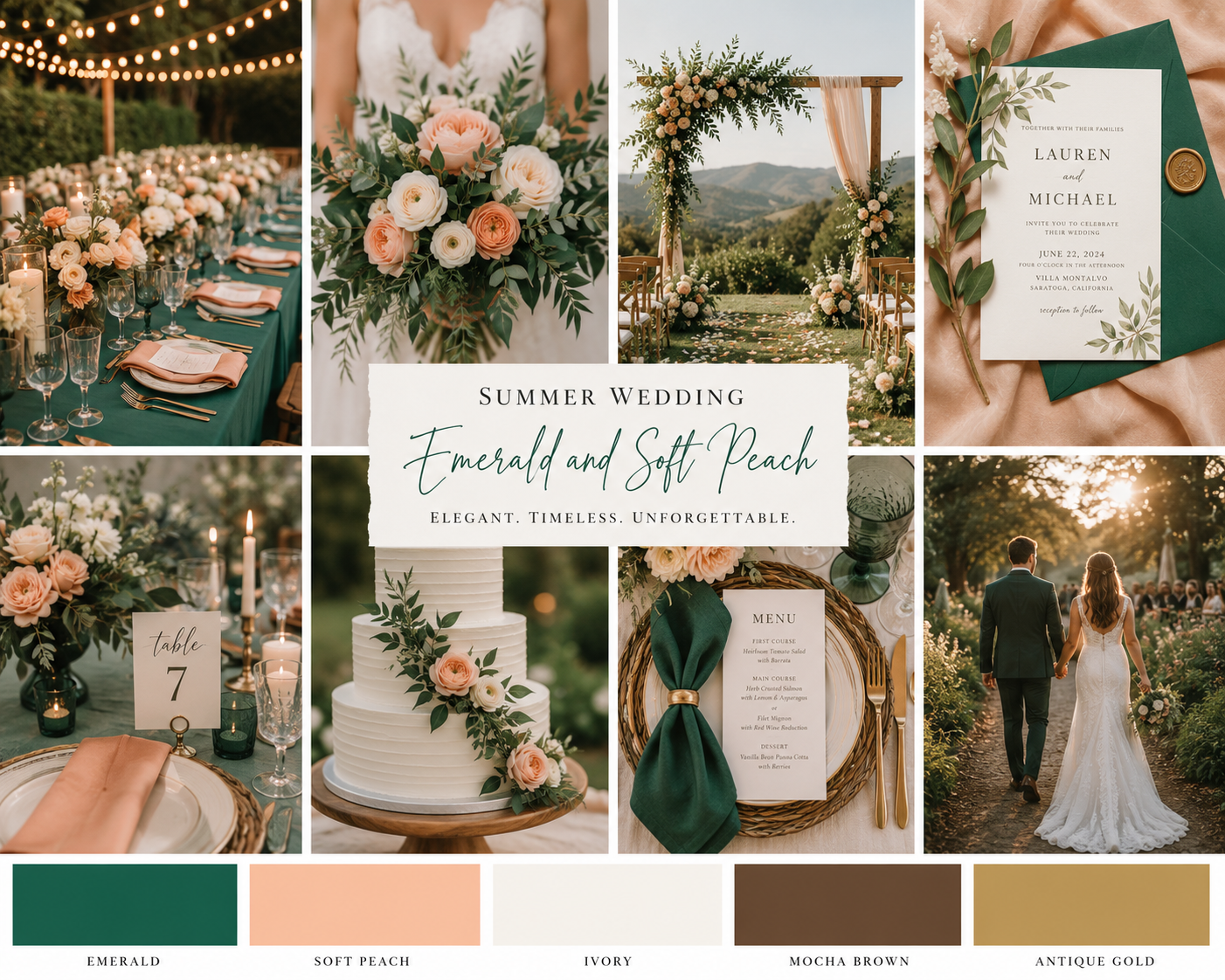
Emerald and Soft Peach 

This season is about fresh and bold colors. Emerald green instantly adds a sense of luxury to any wedding design. Pairing it with peach keeps the overall look soft enough for summer, while still feeling striking. It’s a trendy palette, but creates a refined look. 

This palette is for you if you are seeking a: 

  • Luxury Hotel Wedding

  • Garden Estate

  • Modern Black Tie Wedding

  • Destination Resort


What Makes a Bold Palette Feel Elevated?

Bold does not mean chaotic. The most luxurious modern weddings use color strategically. Focus on the contrast. Create just a little bit of tension between colors, like dark and soft, warm and cool, or vibrant and neutral. 

Even the most spectacular weddings need breathing room. 

Lean heavily on florals, architectural candles, minimal stationary, statement linens, and color blocking. 

Not every detail needs to match perfectly. Elevated weddings layer tones organically instead of repeating the exact same color everywhere.

Modern summer wedding palettes are becoming richer, bolder, and far more design driven than in previous years. Couples are embracing color as part of the storytelling experience, creating weddings that feel immersive, stylish, and unforgettable.

The key is balance. Think of bold color paired with thoughtful styling, layered textures, and intentional restraint. When done well, a strong palette doesn’t feel overwhelming, it feels like art.

From Engagement to I Do: Summer Wedding Planning Timeline (That Actually Works)

Planning a summer wedding sounds idyllic. We’re talking sunshine, long evenings, and vibrant outdoor celebrations, but without a clear timeline it can quickly become overwhelming. As a wedding planner, I’ve seen how a structured, realistic plan makes all the difference between chaos and a seamless, joy filled day. If you’re newly engaged and dreaming of a summer “I do”, here is a practical timeline that actually words - and that will keep you organized, on track, and able to enjoy the planning process. 

12 - 14 Months Before: Set the Foundation 

The first step is vision and logistics. Before diving into details, sit down together and discuss priorities. Think about what matters most. Is it the venue? Guests Experience, photography, or food? This clarity will guide every decision moving forward. 

Next you’ll want to establish your budget. Be honest about what you’re comfortable spending and where you want to allocate funds. Summer weddings are peak season, so venues and vendors book quickly and often at higher rates. 

Once your budget is set, begin researching venues and take some tours of your favorites. Outdoor spaces, gardens, vineyards, and waterfront locations are especially popular for summer, so securing your venue early is essential. Your venue choice will also determine your wedding date, so lock this in as soon as possible. 

During these early stages, consider hiring a wedding planner, if you haven’t already. Having professional guidance early can save time, stress, and costly mistakes. 

10 - 12 Months Before: Book Your Core Vendors
With your venue secured, it’s time to book your key vendors. These are the professionals who typically fill their calendars first. We’re talking about your photographer, videographer, caterer, and entertainment.

When choosing vendors, focus not only on style and pricing but also on personality and communication. You’ll be working closely with these people, so trust and comfort matter.

This is also the time to start thinking about your overall design. You don’t need every detail finalized, but having a general aesthetic, such as your color palette, formality level, and vibe. This will help guide vendor decisions.

8 - 10 Months Before: Dress, Details, and Direction 

Now comes one of the most exciting parts - shopping for your attire. Wedding dresses can take several months to arrive, plus time for alterations, so don’t delay. Begin shopping early to allow yourself options and avoid rush fees.

At the same time, start planning your guest list. While it may evolve, having an estimate is crucial for invitations, catering, and seating.

This is also a great time to create your wedding website and send save the dates, especially for summer weddings when guests may need to plan travel or vacations around your date.

6 - 8 Months Before: Build the Experience

With major vendors secured, shift your focus to guest experience. Book accommodations or reserve room blocks if you have out of town guests. Summer is a busy travel season, so early reservations are key.

Begin working on ceremony details such as the officiant, readings, vows, and the overall structure. If you’re incorporating cultural or religious elements, this is the time to plan them thoughtfully.

You should also start considering rentals if your venue requires them. Check into tables, chairs, linens, tents, lighting, and more. For outdoor summer weddings, tents and shade options are especially important as a backup plan.

4 - 6 Months Before: Time to Fine Tune the Details

This is where your vision starts to come together. Finalize your floral design, decor elements, and overall styling. Meet with your caterer to plan the menu, keeping summer friendly options in mind. Think about lighter fare, fresh ingredients, and refreshing beverages.

Order your invitations during this period. This allows time for printing, addressing, and mailing about 8 to 10 weeks before the wedding.

You’ll also want to book hair and makeup artists if you haven’t already and schedule trials for a later date.

3 Months Before: Confirm and Coordinate 

At the three month mark, it’s all about organization. Confirm details with all vendors, review contracts, and ensure everyone is aligned on timing and expectations.

Schedule your dress fittings and finalize accessories. Begin breaking in your wedding shoes, too. Even this small step makes a big difference.

If you’re planning DIY elements, now is the time to start creating them; we definitely do not recommend starting them the week before. 

2 Months Before: Invitations and Logistics

It’s now time to send out your invitations and begin tracking RSVPs. This is also when you should finalize transportation plans, especially if your ceremony and reception are in different locations.

Create a detailed wedding day timeline with your planner and photographer. Factor in summer specific considerations like heat, sunlight, and golden hour timing for photos. And, we cannot preach enough - prepare a rainy day plan! 

1 Month Before: Final Touches 

As RSVPs come in, finalize your seating chart and provide your caterer with a final guest count. Confirm all final details with vendors, including arrival times and setup needs.

Have your final dress fitting and ensure everything fits perfectly. Prepare an emergency kit with essentials like sunscreen, blotting papers, and hydration options. Summer weddings require a little extra care.

2 Weeks Before: Prepare to Celebrate

At this point, most of the heavy lifting is done. Focus on packing for your honeymoon, organizing wedding day items, and confirming any last minute details.

Delegate responsibilities to trusted friends, family, or your planner so you’re not managing logistics on the day itself. If you have hired a wedding planner, they should be running through your timeline and confirming all of your vendors, too! 

Wedding Week: Stay Present

The final days should be about enjoying the moment. Attend your rehearsal, spend time with loved ones, and take care of yourself. Ensure you and your partner rest, hydrate, and stay grounded.

On the wedding day, trust your team. You’ve put in the work, and now it’s time to experience it all.

Our Summer Specific Tips

Summer weddings come with unique challenges, but with thoughtful planning, they can be incredibly rewarding. Consider guest comfort by providing shade, fans, or even parasols during outdoor ceremonies. Offer signature cocktails or hydration stations to keep everyone refreshed.

Timing is also key. When planning your ceremony, avoid the hottest part of the day.  Late afternoon or early evening ceremonies are not only more comfortable but also better for lighting and photography.

A successful summer wedding isn’t about perfection, it’s all about preparation. With a clear, realistic timeline and a focus on what truly matters, you can create a day that feels effortless, joyful, and uniquely yours.

From engagement to “I do,” every step is part of the story. And when you follow a timeline that actually works, you’ll not only stay organized, but you’ll actually be able to enjoy every moment along the way.

Cultural Fusion Weddings that Tell Your Story

There is something undeniably magical about fusing two cultures together at a wedding. As wedding planners, we have coordinated ceremonies where the scent of fragrant marigolds fill the air, as a string quartet plays at dinner. We’ve coordinated weddings that feature different languages,cultures, but all end in happily married bliss. Planning a cultural fusion wedding isn’t about compromise. It is about carefully choreographed events and traditions so that no one’s heritage feels like an afterthought. 

Here are our recommendations for planning your very own cultural fusion wedding. 


#01: Start with the Story, Not the Aesthetic

Before we spiral down Pinterest boards or pull out a single design board, you must ask yourself… 

  • What traditions feel or are non-negotiable?

  • What rituals did you grow up watching? 

  • What moments make you feel emotional?

  • What traditions do you want to share with your partner? 

Cultures are also more than rituals and recipes. It is truly a memory. It is your family’s language. It is music overheard in your family kitchen while cooking dinner. It’s how blessings are spoken, how your elders are honored, and how vows are framed. 

In our experience, successful cultural fusion ceremonies are not created by checking a boxes of a tradition or two. They are built by identifying the emotional core of each one. What must be present for both partners, for both families to be seen? 

When we start here, the ceremony naturally takes shape. 

#02: Focus on Blending, Not Dividing 

One of the most common misconceptions about fusion weddings is that they must be distinct halves, with one culture followed by another culture. But, the most beautiful weddings we have curated, do not feel divided. On the contrary, they feel layered. 

Instead of alternating traditions like chapters in a book, we often weave them together. A ritual may flow into a vow. Or a symbolic gesture may echo themes already expressed in readings or music that become cohesive rather than compartmentalized. 

#03: Education Creates Inclusion 

Fusion of ceremonies often introduce guests to customs they have never seen before. That is a gift, but requires intention. As planners, our job is to guide couples to gently frame their traditions so everyone understands the meaning and importance behind them. A short explanation by an officiant, or a note in the program. A thoughtful transition between ceremony elements. 

When your guests understand why something is happening, they lean in emotionally. What could feel unfamiliar can become deeply moving for your guests. 

Culture shared with context builds connection. 

#04: The Balance Between Reverence and Personalization 

Another delicate dance in cultural fusion planning is balancing tradition with individuality. Many rituals carry generations of significance. At the same time, modern couples often wan to shape their day to reflect their own identity, not just their ancestry. The key is flexibility with respect. Some couples choose to maintain their traditions as they’ve been practiced for decades. Others reinterpret rituals in subtle ways so they align with their values and aesthetic. Neither approach is more “correct” than the other. What matters is intentionality. 

Remember - a ceremony should never feel performative. It should feel authentic. 


#05: How to Navigate Family Dynamics

Fusion weddings frequently bring together families with different expectations around marriage, with different ceremonies. 

Some may prioritize religious structure. Others may focus on the celebration. Some will expect certain rites to be included without question. Part of our role as a wedding planner, is a mediator and a translator. Not of language, but to provide perspective. 

We create space for conversation early in the planning process. We identify which elements are emotionally essential and which are flexible. Often, compromise doesn’t mean removing a tradition. It may mean adjusting its placement, scale, or format so that it fits naturally into the overall flow. When families feel heard, the ceremony feels harmonious.

#05: Designing for Flow 

Cultural fusion ceremonies sometimes include more symbolic elements than a single-tradition wedding. That means pacing matters. Keep in mind that moments need room to breathe. Transitions should feel intentional, not abrupt. Music, readings, and ritual gestures must support one another rather than compete for attention.As planners, we think about energy: when it rises, when it softens, when silence is powerful.

The most moving ceremonies aren’t rushed. They unfold.

#06: Visual Harmony Without Stereotypes

From a design perspective, cultural fusion weddings offer incredible inspiration. But restraint is just as important as creativity. It can be tempting to overemphasize cultural symbols in décor. However, meaningful design often lies in subtle integration rather than overt contrast.

We look for shared themes such as: color symbolism, natural elements, architectural influences, or textile traditions that complement one another. When done well, the space feels cohesive rather than divided into aesthetic territories. The goal is not to create a museum of heritage. It’s to create an environment where both histories coexist beautifully.

#07: The Role of Ritual 

Ritual is the heartbeat of a cultural ceremony. It’s what connects the present moment to generations past. In fusion weddings, rituals may serve different purposes. For example, some centered on unity, others on family, blessing, protection, or prosperity.

What’s remarkable is how often these themes overlap across cultures. Love. Commitment. Community. Hope. When couples recognize that many traditions share similar intentions, blending them becomes less about difference and more about harmony.

#08: Language as a Legacy 

In some fusion ceremonies, vows or blessings are spoken in more than one language. Even if only a few words are shared, the emotional impact is profound. Language carries heritage in a way that décor never could. It honors parents and grandparents. It reminds guests that love can transcend translation. These moments are often quiet, but unforgettable.

If there is one thing I’ve learned from planning cultural fusion weddings, it’s this: love does not dilute identity. It expands it. A fusion ceremony doesn’t require either partner to leave part of themselves behind. Instead, it creates space for both histories to stand side by side.It is a visible reminder that marriage is not about erasing differences;it is about embracing them with respect and intention.

As a planner, I consider these weddings some of the most meaningful celebrations to design. They require patience, empathy, and creativity. They challenge us to think beyond templates and trends.

But when the ceremony concludes, when two families, two cultures, and two individuals step forward as one, the result is always worth it.

Because at its heart, a cultural fusion wedding isn’t about blending traditions.